

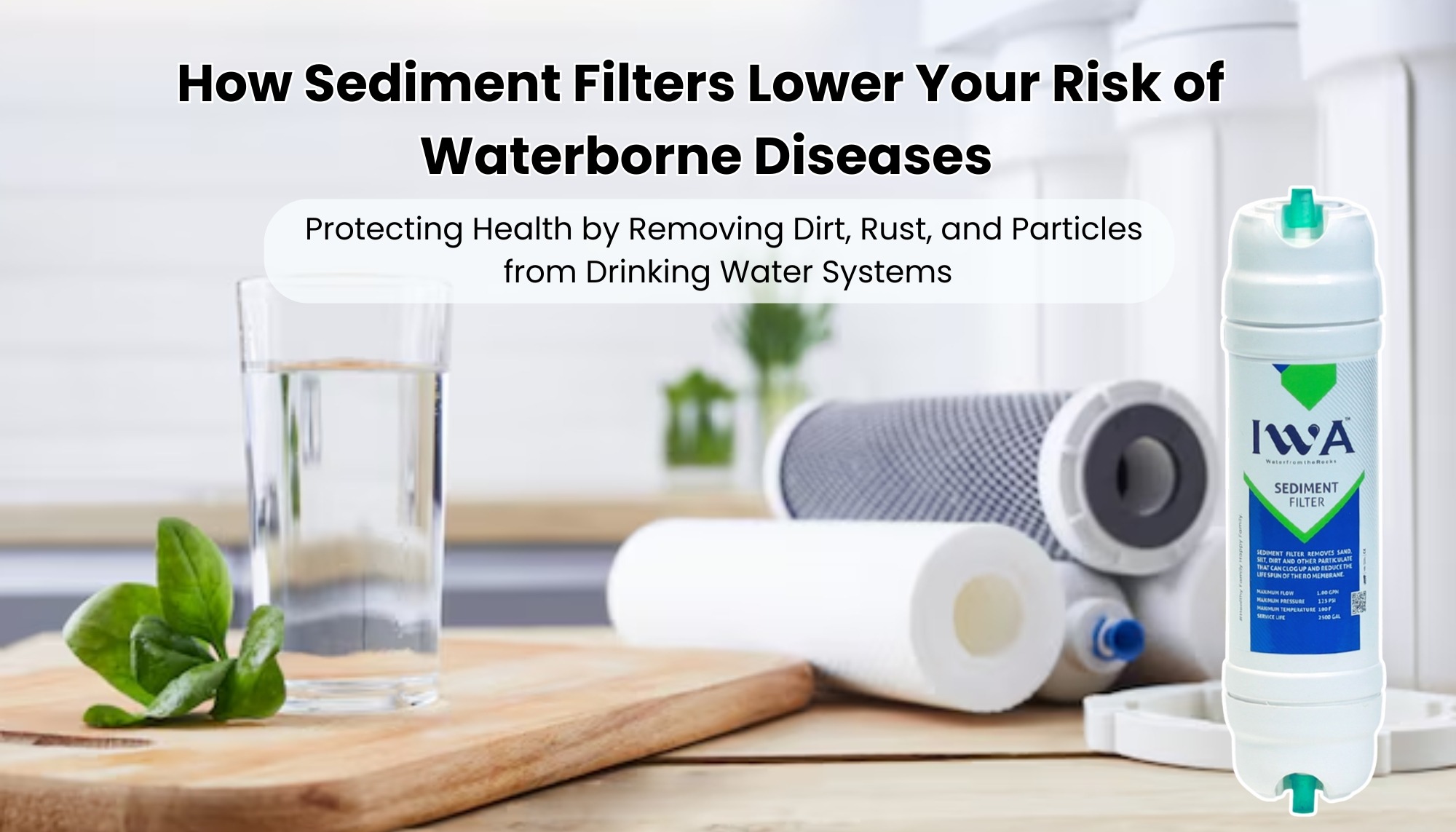
Clear-looking water isn’t always safe to drink. Invisible, small particles bringing unknown dangers linger. Invisible grains of matter, dirt, rust, and sand known as sediments, can be dangerous to health when not addressed. They create tiny spaces in which harmful microbes, such as bacteria and other germs, can grow. That’s where sediment filter come in.
Let’s look into how these sediment filters protect us from waterborne diseases.
What Are Sediment Filters?
Sediment filters are devices that filter solids from water. They’re often the first line of defense in home filtration systems, especially for homes that use well water or live in communities with subpar water quality. These filters work by capturing soil and debris as the liquid passes through. The goal is to keep these bits from getting into your taps, your appliances, and, most importantly, your body.
Understanding Sediments and Why They Matter For Your Health
You’ll wonder what harm a speck of sand or rust can do? Sediment itself is not necessarily dangerous, but it creates the ideal environment for bacteria and other pathogenic microorganisms to thrive. This buildup can ultimately cause serious health complications over time.
Here’s how it occurs:
- Microbial cultivation: Sediment in water may shelter single-celled organisms such as bacteria and viruses from water disinfectants (like chlorine). This makes them more difficult to kill, raising your chances of becoming infected.
- Contaminated surfaces: Sediment that settles in storage tanks or pipes can become a vehicle for pathogens to grow.
- Irritation and infections: Ingesting or using water containing fine particles can lead to gastrointestinal distress, skin irritation, and even infection.
In brief, sediment is a gateway to waterborne diseases, and preventing their entry is a good decision.
How Sediment Filters Help
Sediment filters are blockades, stopping these harmful particles from traveling in your water piping system. Here are a few of the ways they can help reduce the risk of waterborne illness:
- Cleaner water means safer water: By eliminating dirt, sand, and rust, sediment filters prevent bacteria from having places to settle and breed. Some remove even microscopic bacteria and parasite-carrying particles.
- Enhanced overall filtration: Sediment filters protect the subsequent filters, like carbon or UV systems. When sediment blocks these systems, they become less efficient. Sediment filters usually trap larger particulates first, which helps to ensure the proper function of other components.
- Longer-lasting infrastructure: Over time, sediment can break down plumbing and home appliances. Filters reduce this wear and tear, saving on repair costs and health risks from corroded lines and fixtures. Filtration also prolongs the life of water infrastructure in a home.
Where You Can Use Them
You can install sediment filters at the point where water enters your home or at specific taps. They are especially suited to:
- Homes using well water,
- locations with high sediment levels in municipal supplies,
- and individuals with sensitive health conditions.
Even if you already use a water purifier, adding a sediment filter can make a big difference.
Easy to Maintain
Most sediment filters are easy to put in place and maintain. Replace the filter cartridge every few months based on water quality and use. Advanced models may automatically notify you when it’s time for replacement.
Final Thoughts
Clean water is among the most basic needs, but it can also be easy to take for granted. Sediment filters, in particular, provide an inexpensive, low-hassle approach for anyone wishing to reduce the risk of waterborne illnesses. They save not only your health, but also your plumbing, appliances, and peace of mind. If you don’t want to worry about what’s in your water, we recommend starting with a sediment filter. It’s a small step with huge benefits.